

A brief roundup of United Nations political and peacebuilding events and developments globally.
Deputy Special Coordinator Alakbarov stresses Gaza recovery must advance underlying political objectives with a restored political process
On 21 May, Ramiz Alakbarov, Deputy Special Coordinator of the Secretary-General for the Middle East Peace Process, briefed the Security Council on the situation in the Occupied Palestinian Territory, warning that conditions in Gaza remain precarious amid daily violence and delays in implementing Security Council resolution 2803 (2026). He also expressed concern over deteriorating conditions in the West Bank, including continued settlement expansion, rising settler violence and displacement, while reiterating the need to advance recovery efforts in Gaza and return to a political path towards a two-State solution. “Ultimately, recovery in Gaza must advance the underlying political objectives: the reunification of the Gaza Strip and the West Bank under a single, legitimate, sovereign Palestinian government, and a restored political process that will end the unlawful occupation and realize a two-State solution,” he said.
Council hears call for renewed diplomacy and ceasefire in Ukraine
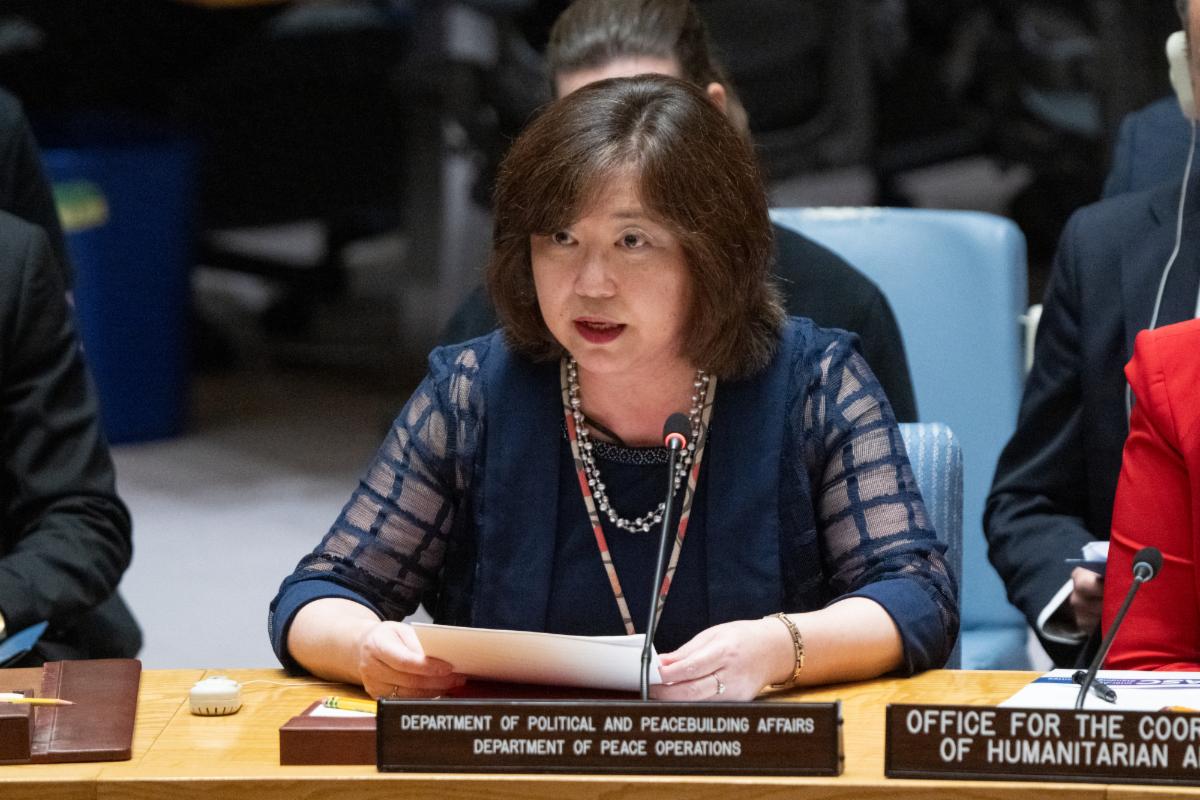
On 19 May, Kayoko Gotoh, Director of the Europe and Central Asia Division in DPPA-DPO, briefed the Security Council on Ukraine, deploring that the war is becoming increasingly deadly, with April recording the highest monthly number of civilian casualties since July 2025. She highlighted large-scale Russian aerial attacks across Ukraine and reported Ukrainian strikes across the Russian Federation, which have resulted in civilian casualties on both sides of the border. She also expressed concern over recent incidents involving UN humanitarian vehicles struck by drones. She welcomed recent prisoner-of-war exchanges and stressed the need to resume negotiations without delay to prevent further escalation and advance a full, immediate and unconditional ceasefire. “Dialogue grounded in genuine political will and adherence to the UN Charter, international law and relevant UN resolutions is the only way to achieve a just, lasting and comprehensive peace,” she stressed.
Peacebuilding Commission discusses disarmament, demobilization and reintegration
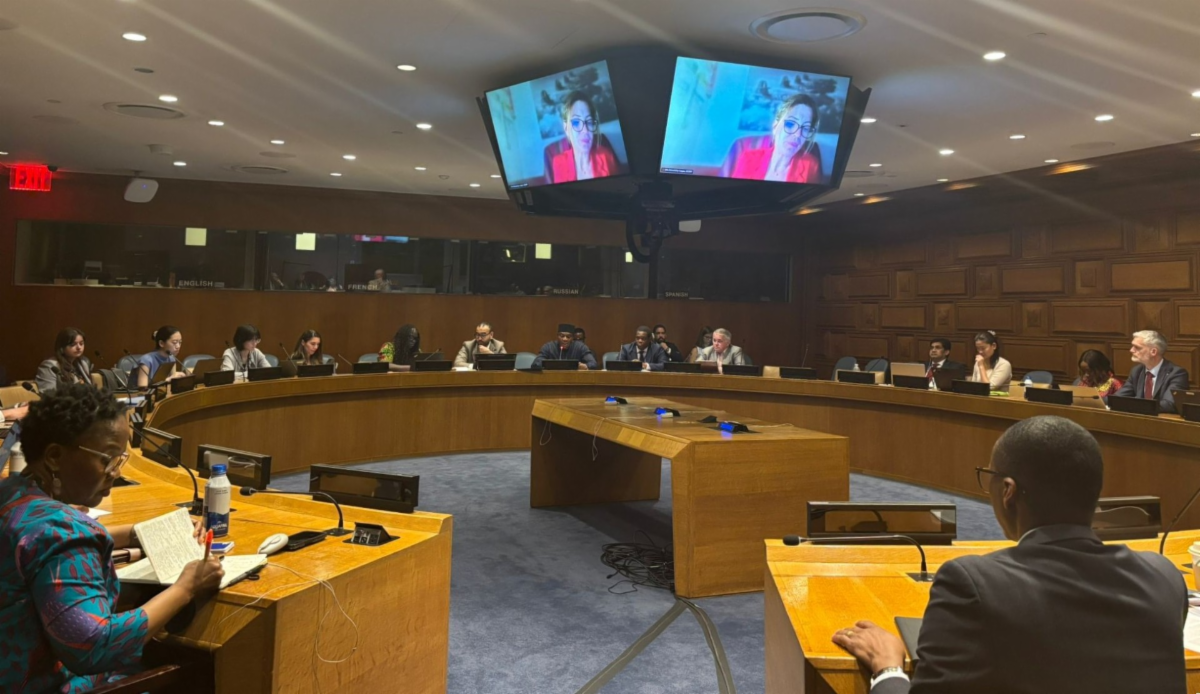
On 19 May, the Peacebuilding Commission (PBC) convened an expert-level meeting on disarmament, demobilization and reintegration (DDR) and its contribution to peacebuilding. Representatives from Colombia, Nigeria, and Sierra Leone underscored the importance of community trust, reconciliation, livelihoods, and inclusive political participation in peacebuilding. Briefers from the Peacebuilding and Peace Support Office (PBPSO) and the Global Community Engagement and Resilience Fund highlighted the growing importance of integrated and prevention-oriented DDR approaches, including strong engagement with civil society, women, youth, and local communities. Member States emphasized that DDR is both a political and societal process requiring nationally led, gender-responsive and context-specific strategies, reliable financing, and strengthened collaboration among the United Nations, regional organizations, as well as South-South cooperation.
Peacebuilding Commission reflects implementation of 2025 Peacebuilding Architecture Review
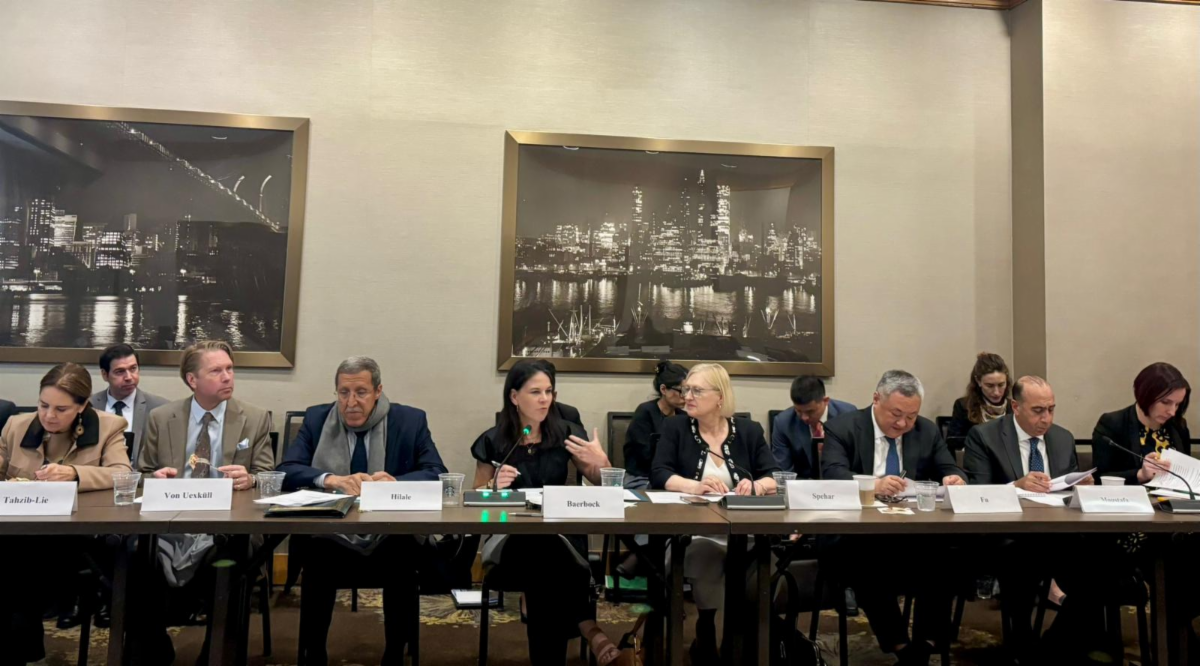
On 15 May, PBPSO and the Dag Hammarskjöld Foundation convened an informal retreat for members of the PBC to discuss implementation of the 2025 Peacebuilding Architecture Review, with a focus on strengthening impact, partnerships, and prevention at the country level. Bringing together 30 Permanent Representatives/ Deputy Permanent Representatives/ Ambassadors, the President of the General Assembly, the President of the Security Council, and the representatives from the World Bank and the United Nations Global Compact Office, discussions focused on enhancing the role of the PBC, strengthening partnerships for peacebuilding and sustaining peace, and advancing prevention efforts in the current geopolitical context. Participants underscored the importance of the PBC in supporting countries in developing national prevention strategies, including through its convening role. They also highlighted the importance of translating the Peacebuilding Architecture Review into measurable impact at country level.
Deputy Special Envoy Cordone discusses UN-Syria cooperation and underscores accountability efforts
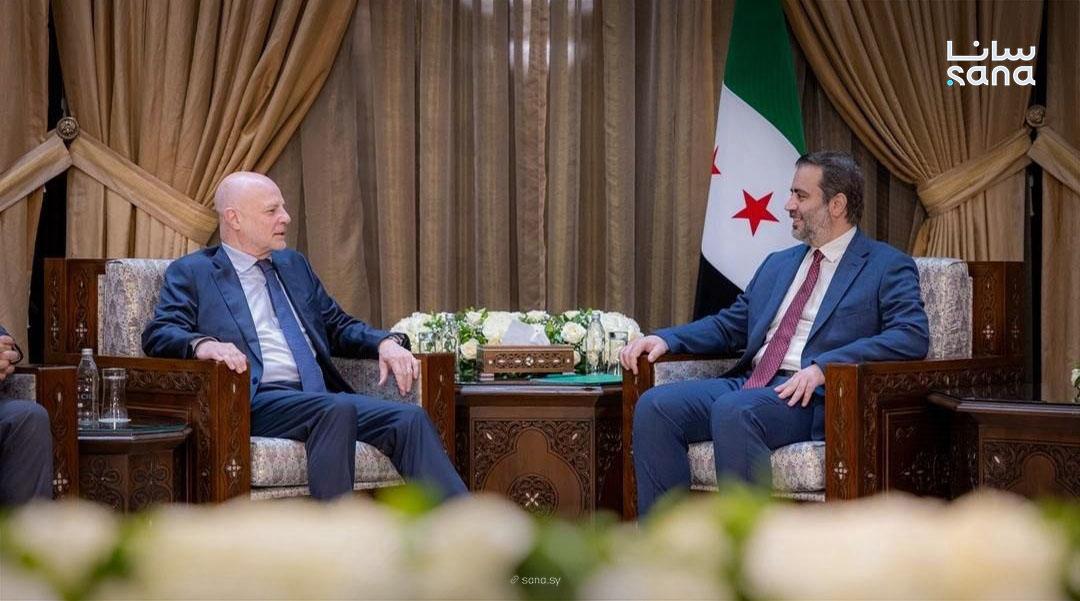
During his third visit to Damascus this week, Deputy Special Envoy of the Secretary-General for Syria Claudio Cordone held a positive meeting with Foreign Minister Asaad al-Shaibani, discussing on UN-Syria cooperation in support of Syria’s transition. Underscoring the importance of accountability and due process, he attended the trial of Atef Najib and other defendants in absentia for the violent repression of demonstrations in Deraa in 2011. He met with the Syrian Bar Association, as well as survivors and families of victims of atrocities committed during the conflict in Syria, paying tribute to their suffering, patience and dignified pursuit of justice.
SRSG Kaha Imnadze visits Dushanbe, Tajikistan
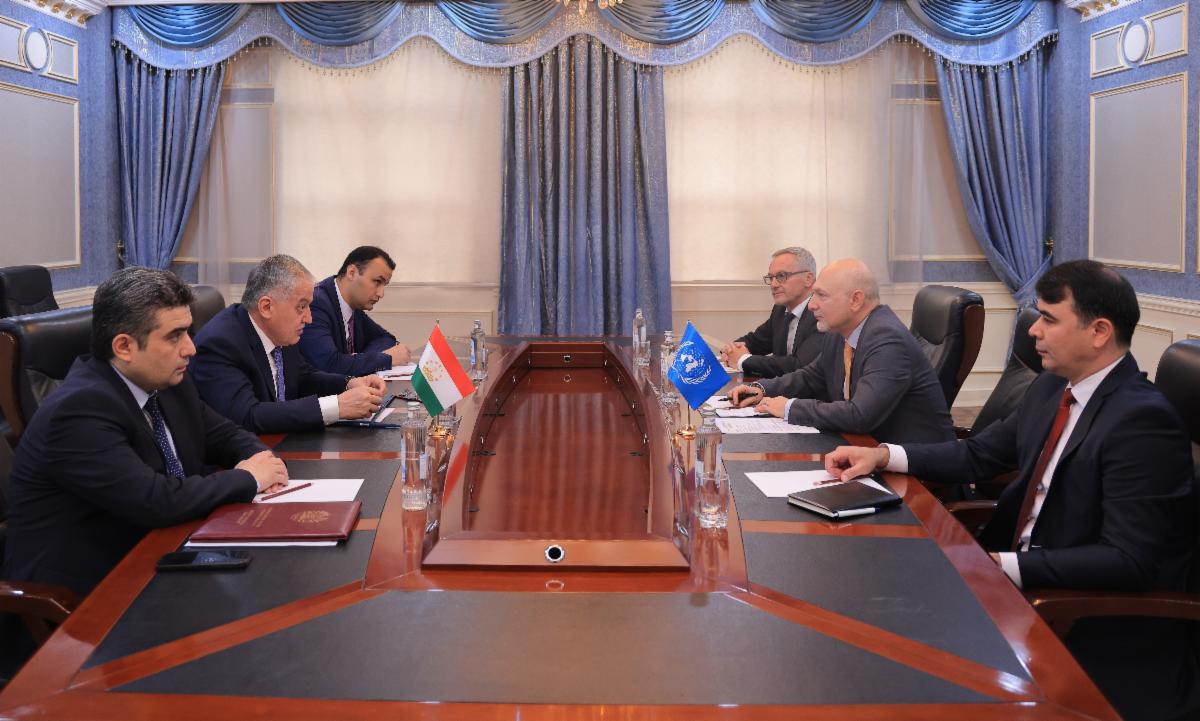
From 18 to 22 May, Kaha Imnadze, Special Representative of the Secretary-General and Head of the United Nations Regional Centre for Preventive Diplomacy for Central Asia (UNRCCA), visited Dushanbe for consultations with senior government officials of Tajikistan. Discussions focused on regional dialogue and cooperation, security and stability, counter-terrorism efforts, developments in Afghanistan, transboundary water management, border cooperation, and the Youth, Peace and Security and Women, Peace and Security agendas. Participants also discussed preparations for upcoming regional initiatives and events, including the Dushanbe Water Process, the Fergana Peace Forum and the Annual Meeting of Deputy Foreign Ministers of Central Asian States. The discussions underscored the importance of continued cooperation between Tajikistan and UNRCCA in advancing preventive diplomacy, building trust and addressing shared regional challenges.
UNRCCA engages youth on human rights and responsibilities
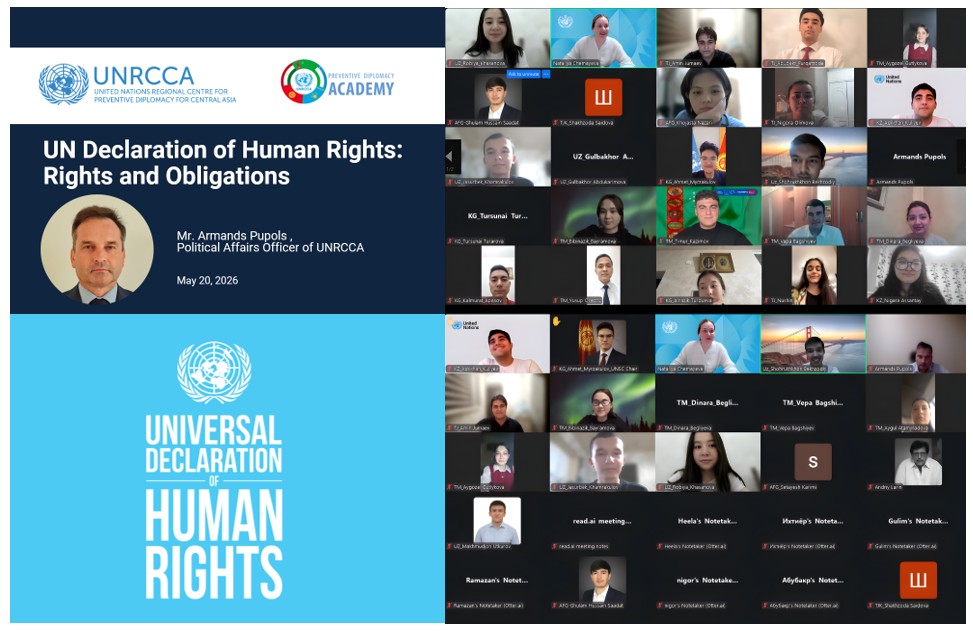
The UNRCCA Preventive Diplomacy Academy convened on 20 May an online session bringing together emerging leaders from Central Asia and Afghanistan to discuss the Universal Declaration of Human Rights and its application to governance, diplomacy and civic engagement. Through scenario-based discussions and case studies, including on Afghanistan, participants explored how dialogue, humanitarian engagement and preventive diplomacy can support human rights in complex contexts. Discussions also examined the role of international mechanisms, including the Human Rights Council and the Universal Periodic Review, as platforms for accountability and cooperation. The session highlighted the role of preventive diplomacy in strengthening understanding, cooperation and human rights awareness across the region.
UNSMIL welcomes strong participation in Local Youth Council elections
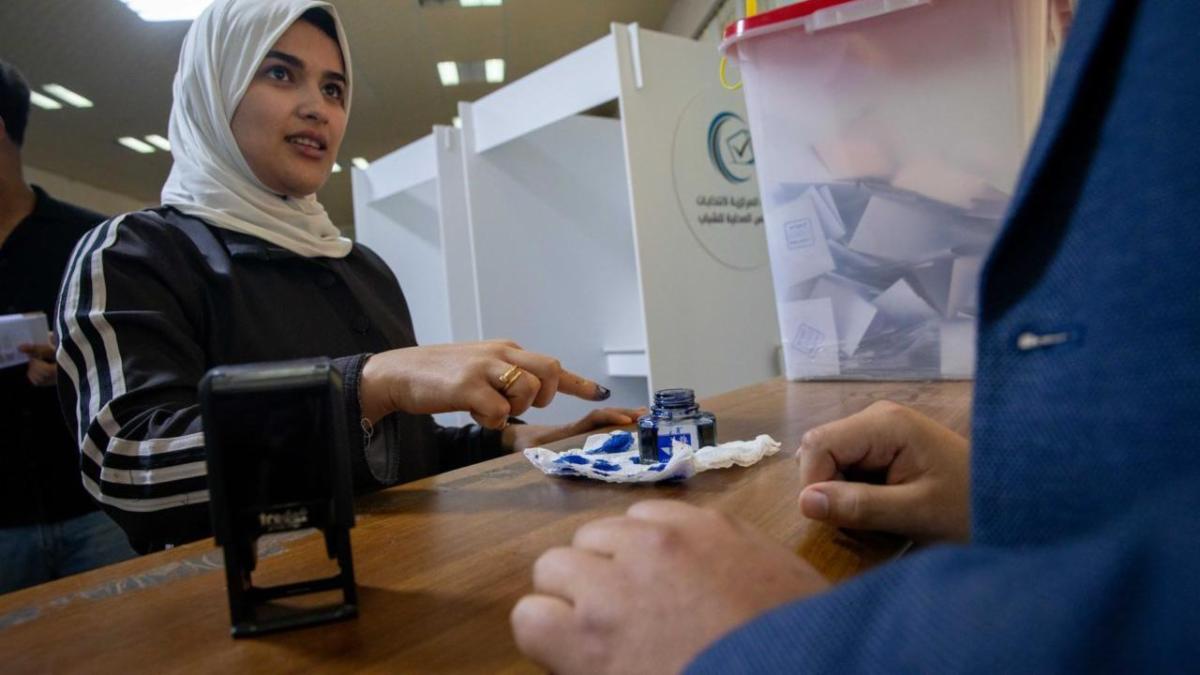
On 19 May, the United Nations Support Mission in Libya (UNSMIL) welcomed the broad participation in Local Youth Council elections held across 30 municipalities in western Libya, where more than 70,000 young Libyans, including 35 per cent women, cast their votes. UNSMIL highlighted the importance of youth engagement in strengthening democratic culture, promoting inclusion and ensuring that governance processes reflect the aspirations of all Libyans.
Murals of reconciliation bring communities together in Meta, Colombia
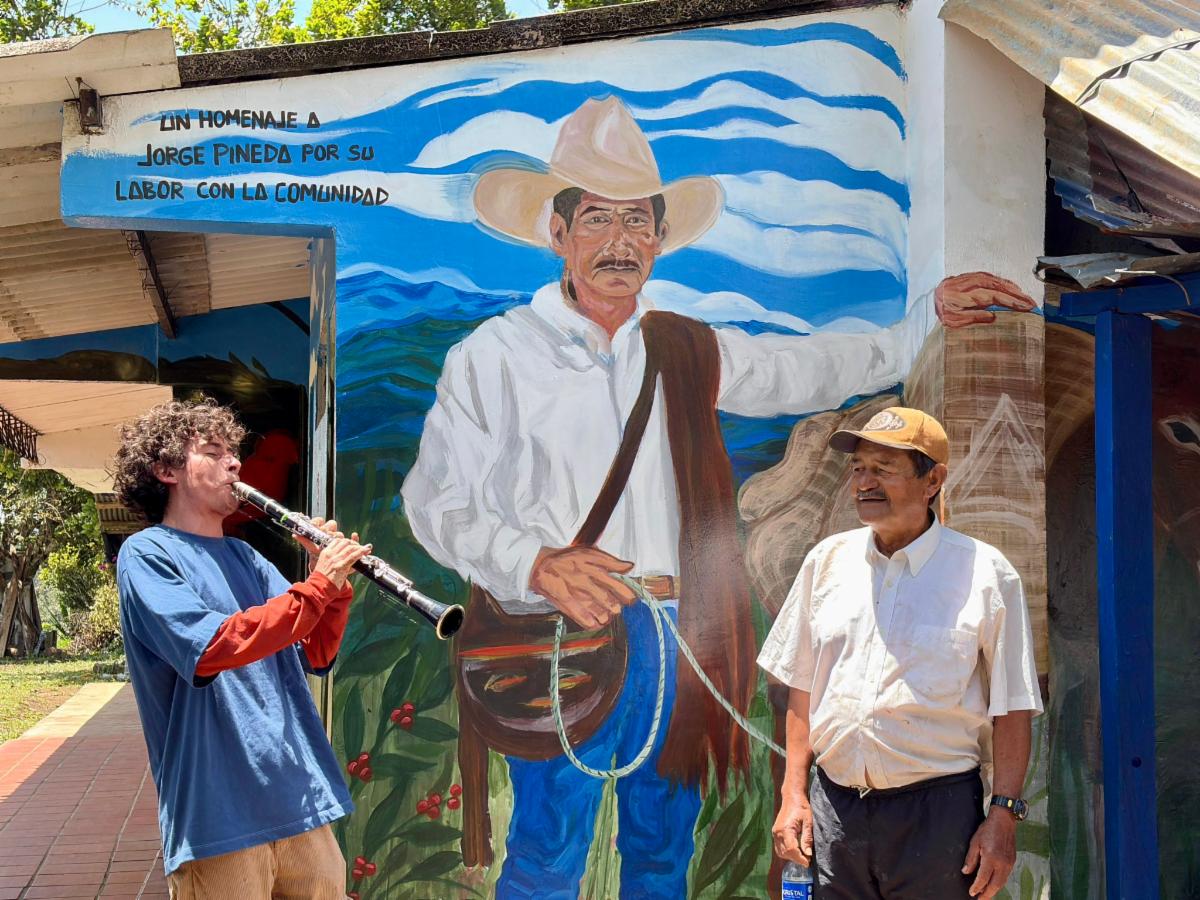
On 17 May, a school in the rural village of Cafetales, Meta, hosted a reconciliation initiative that brought together former combatants and residents to create a mural promoting coexistence and peacebuilding. With backing from the National Reintegration Agency’s Reintegration Promotion Strategy, the activity highlighted the role of community-based initiatives in rebuilding trust and strengthening reintegration efforts in conflict-affected areas. The United Nations Verification Mission in Colombia, alongside social organizations, accompanied the event, where participants emphasized the importance of such initiatives in areas historically affected by limited State presence and investment. Community members also welcomed recent improvements to the local school as a contribution to dignity, opportunity and sustainable peace.
Secretary-General highlights strengthened AU-UN partnership and calls for greater support for Africa
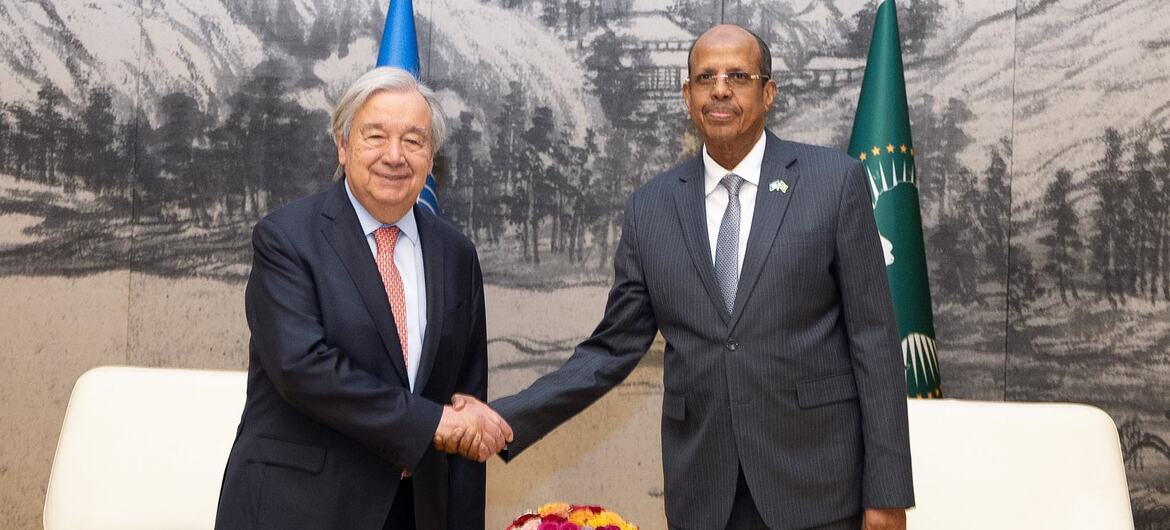
During the AU–UN summit in Addis Ababa on 13 May, Secretary-General António Guterres and AU Chairperson Mahmoud Ali Youssouf reaffirmed the strategic partnership between the United Nations and the African Union, signing a declaration to further institutionalize cooperation on peace and security, sustainable development and human rights. The Secretary-General emphasized the need for reform of the international financial architecture and renewed calls for permanent African representation on the Security Council, describing Africa’s continued exclusion as a “historical injustice.” He also stressed the importance of increasing investment in sustainable development and climate adaptation across the continent, while supporting Africa’s role in the global renewable energy transition.
UN and NGOs launch $529 million response plan for 2.7 million Afghan returnees from Iran and Pakistan
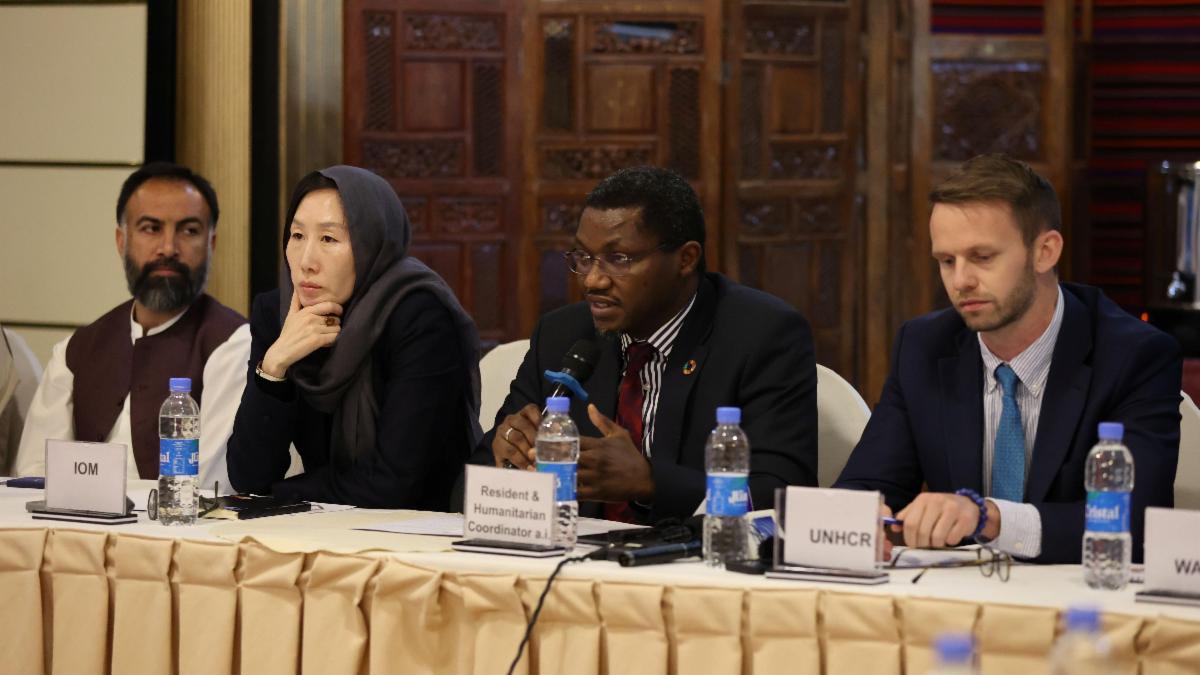
On 19 May, the United Nations and national and international NGO partners launched the 2026 Response Plan for Afghan Returnees (RPAR), seeking $529 million to support an estimated 2.7 million Afghans expected to return from Iran and Pakistan between April and December 2026. The plan aims to assist border crossing points through to communities of return across Afghanistan. The response comes amid a sharp increase in returns since September 2023, with nearly 5.9 million Afghans returning to the country over the past two years, including 2.9 million in 2025 alone. The plan outlines a two-tier approach focused on emergency assistance at border points and longer-term reintegration support in areas of return, including access to health, education, livelihoods, housing and protection services. UN and NGO partners called for sustained international support to prevent worsening poverty, secondary displacement and increased pressure on host communities.
New podcast episode explores climate, peace and security challenges in Haiti
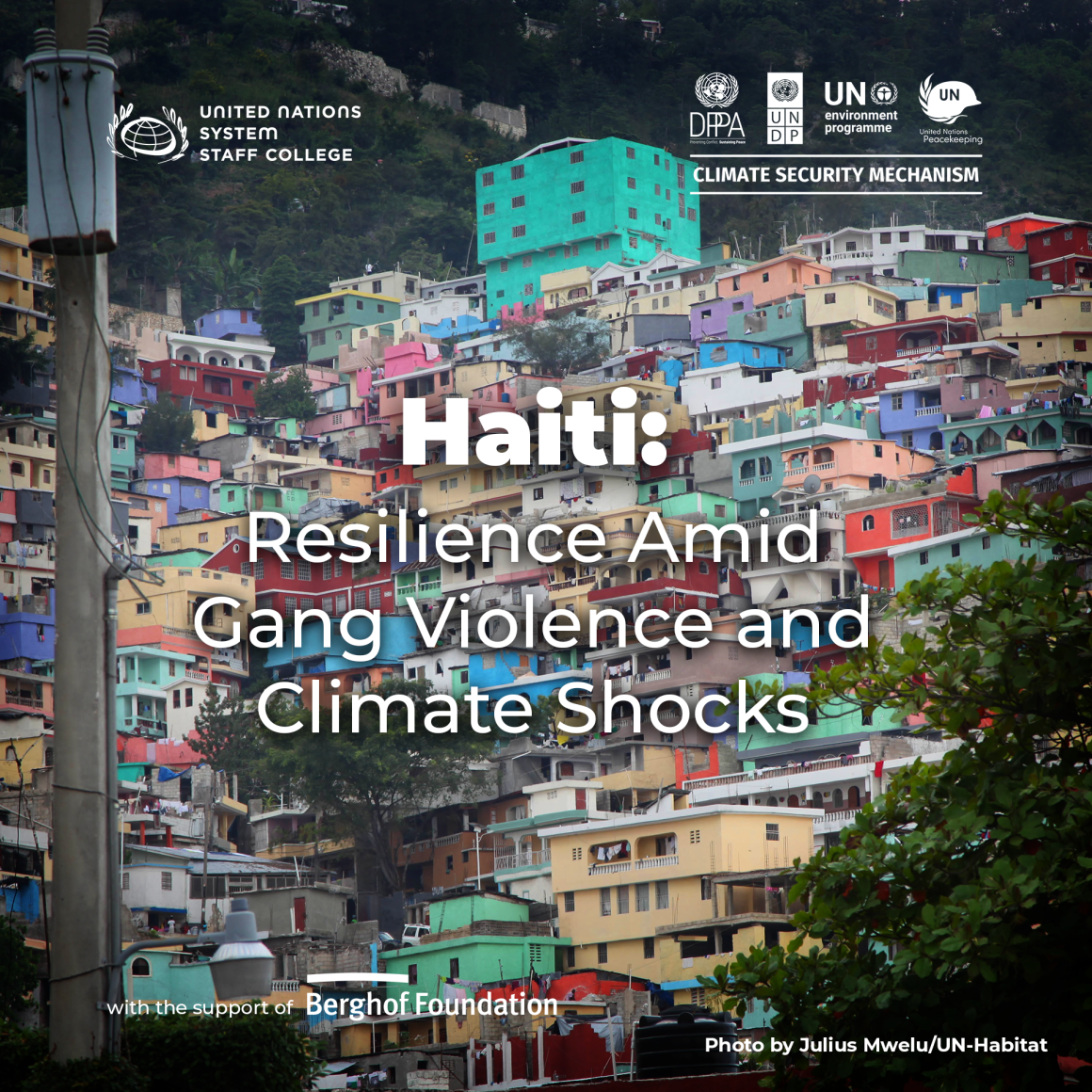
The latest episode of Climate, Crisis and Courage – A UN Podcast examines how climate shocks and environmental degradation are compounding violence and instability in Haiti. The episode explores how these overlapping pressures affect communities across the country, including in Port-au-Prince, and their implications for peace and security. Through conversations with Paul Judex Eduarzin of the United Nations Environment Programme and Robert Muggah of the Igarapé Institute, the episode highlights locally led efforts to protect livelihoods, reduce tensions and strengthen resilience in the face of interconnected climate and security challenges.
Next Week
On 26 May, the Security Council will hold a high-level open debate on maintenance of international peace and security: upholding the purposes and principles of the UN Charter and strengthening the UN-centered international system.


