

A brief roundup of United Nations-related political and peacebuilding events and developments globally.
USG DiCarlo notes "brutal surge in large-scale Russian attacks" across Ukraine
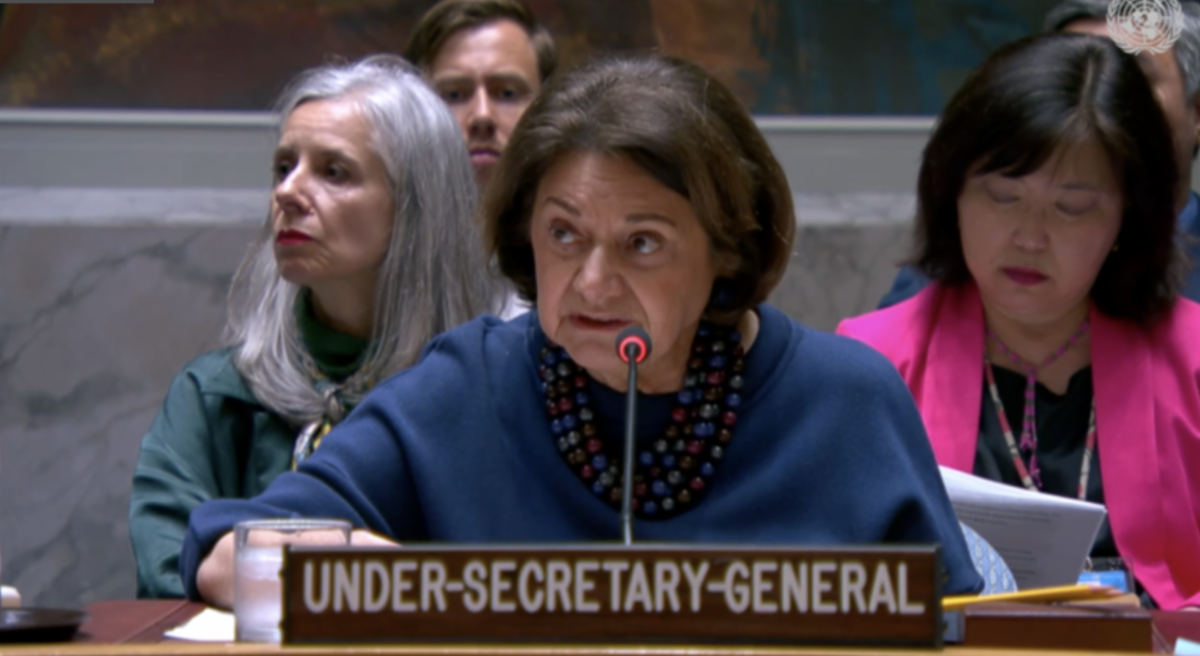
On 29 May, Under-Secretary-General Rosemary DiCarlo said that when she last briefed the Security Council, there was "cautious hope of progress on the diplomatic front to stop the fighting" in Ukraine. However, she said, instead of steps towards peace, the world "witnessed a brutal surge in large-scale Russian attacks across the country." The escalation came after a relative reduction in the intensity of attacks, including a unilateral 72-hour truce declared by the Russian Federation from 8-11 May. The USG noted that for three consecutive nights last weekend, Russian armed forces attacked Ukrainian cities and towns with record numbers of long-range missiles and drones, killing and injuring dozens of civilians. Most of the casualties were recorded in Kyiv, Kharkiv, Odesa and Mykolaiv, as well as in other densely populated areas. In total, she said, since the start of Russia’s full-scale invasion of Ukraine in February 2022, at least 13,279 civilians, including 707 children, have been killed. The confirmed number of civilians injured stands at 32,449, including 2,068 children.
"The two-State solution is on life support," Special Coordinator Kaag tells Security Council
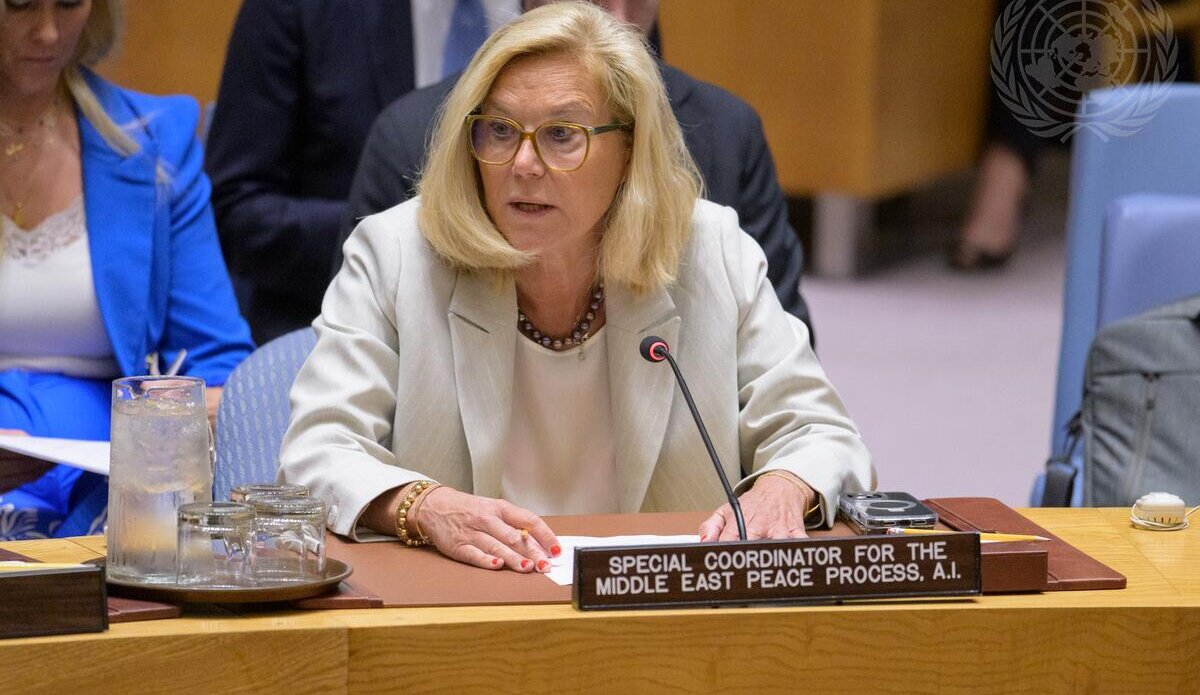
On 28 May, UN Special Coordinator for the Middle East Peace Process ad interim Sigrid Kaag said that since the collapse of the ceasefire in March, civilians had constantly come under fire and were deprived of life-saving relief. Israel must halt its devastating strikes on civilian life and infrastructure in Gaza, she said. On 18 May, the UN was informed by Israeli authorities of the approval for the resumption of limited aid entry into Gaza. This was comparable to “a lifeboat after the ship has sunk”, she said, stressing that aid cannot be negotiable. On the West Bank, she noted the acceleration of the “de facto annexation through settlement expansion, land seizures and settler violence." The General Assembly’s high-level International Conference for the Peaceful Settlement of the Question of Palestine and the Implementation of the Two-State Solution, to be held in June, must not end up as “another rhetorical exercise”, she said, adding: “Statehood is a right, not a reward.”
Peacebuilding Commission's Country-Specific Configuration on Liberia convenes an Ambassadorial level meeting
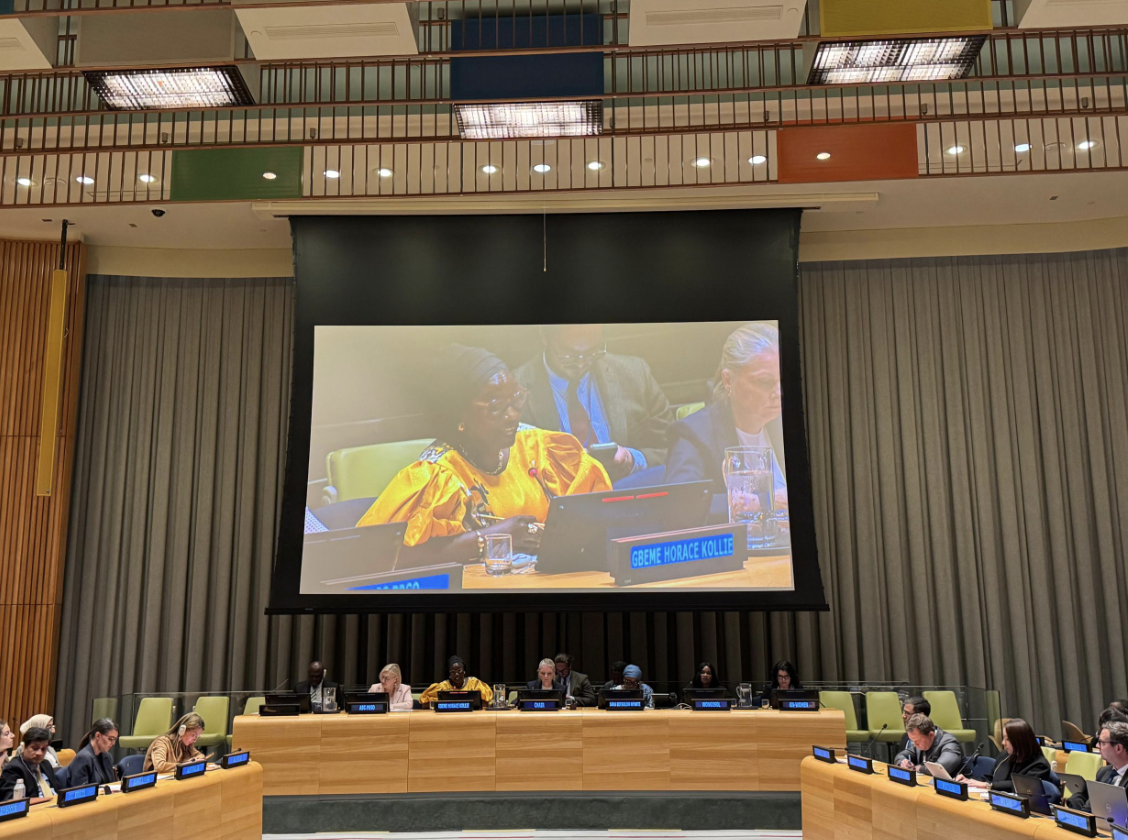
On 28 May, the Peacebuilding Commission's (PBC) Country-Specific Configuration on Liberia convened an Ambassadorial level meeting with the Minister of Foreign Affairs and of Gender, Sara Beysolow Nyanti, Minister of Children and Social Protection, Gbeme Horace Kollie, to consider Liberia's peacebuilding priorities. The Assistant Secretary-General for Peacebuilding Support, a civil society representative, and the UN Resident Coordinator in Liberia also participated. Member States commended Liberia for the progress towards implementing its second National Action Plan on WPS (2019–2024) and welcomed Liberia's commitment to developing a third Plan as well as efforts towards developing a first National Action Plan on Youth, Peace and Security. Member States also noted Liberia’s commitment to implement the recommendations of the Truth and Reconciliation Commission.
Peacebuilding Commission convenes Ambassadorial level meeting with President of São Tomé
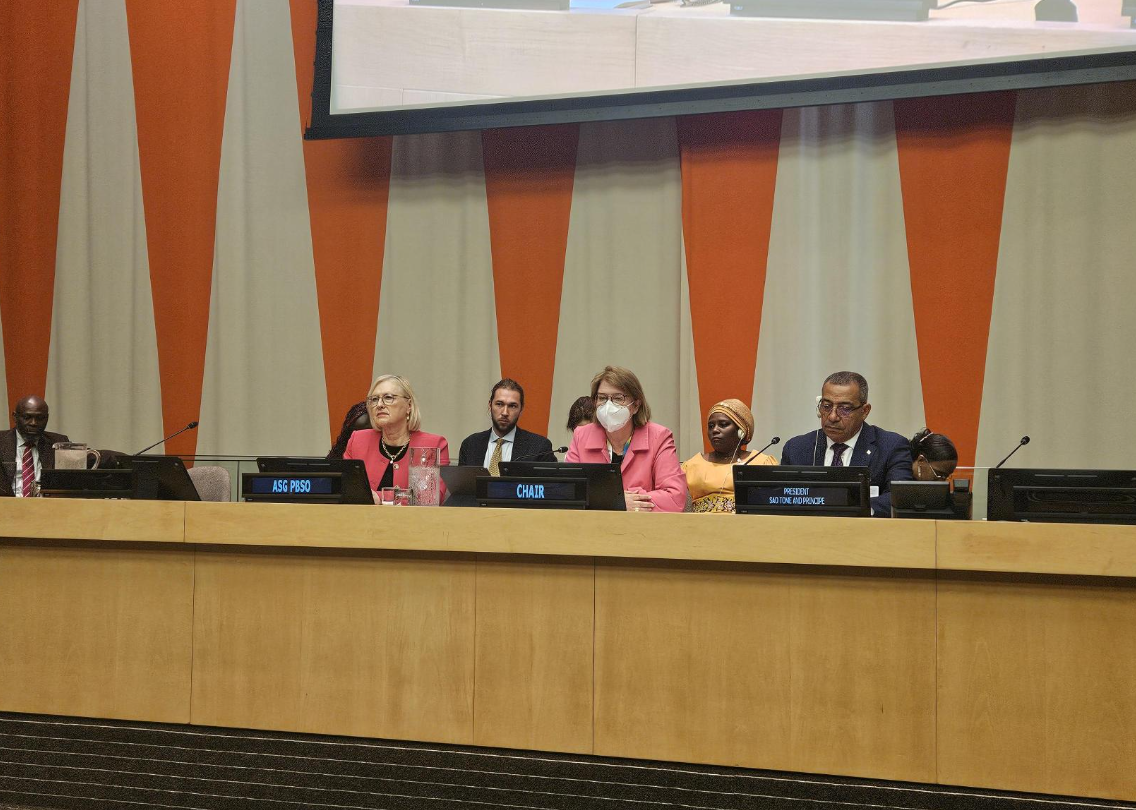
On 29 May, the PBC convened an Ambassadorial level meeting to hear a presentation from the President, Carlos Vila Nova, on São Tomé and Principe’s newly adopted Conflict Prevention Strategy and to also consider the country’s peacebuilding priorities. The Conflict Prevention Strategy was developed with close support from the UN System, including from the Resident Coordinator, the PBC and the Peacebuilding Fund, and further also to recommendations contained in the Pact for the Future. The Special Representative of the Secretary-General (SRSG) for Central Africa and Head of the United Nations Regional Office for Central Africa (UNOCA), Abdou Abarry, a representative of the African Development Bank, a civil society representative, and the Assistant Secretary-General for Peacebuilding Support also briefed. Member States recognized that the Strategy will serve as a crucial framework to guide peacebuilding efforts. They also encouraged the provision of political and resource-mobilization support to help ensure its effective implementation. A joint PBC-São Tomé statement is planned for issue.
USG DiCarlo addresses Jeju Forum
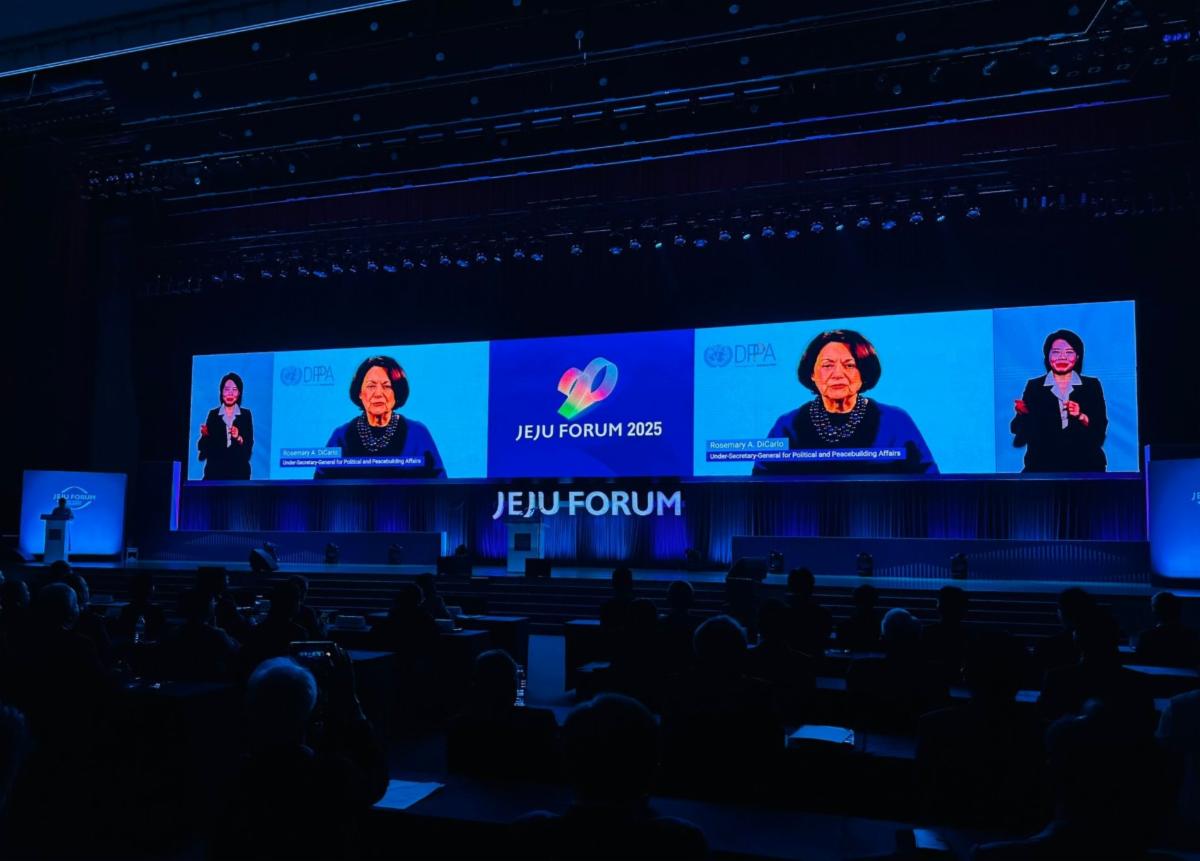
In recorded remarks to the 20th Jeju Forum for Peace and Prosperity in the Republic of Korea, held from 28-30 May, USG DiCarlo highlighted the need to reimagine approaches to global peace and cooperation. “Innovation for peace is not only about technology. It is about fresh mindsets, new partnerships, and the ways we work together” she noted. USG DiCarlo emphasized that at a time of global uncertainty, regional cooperation matters more than ever, and a stronger and more efficient UN is in the interest of all of us. She underscored the importance of meaningful inclusion of women and youth, stating they are “not just beneficiaries of peace; they are builders of it”.
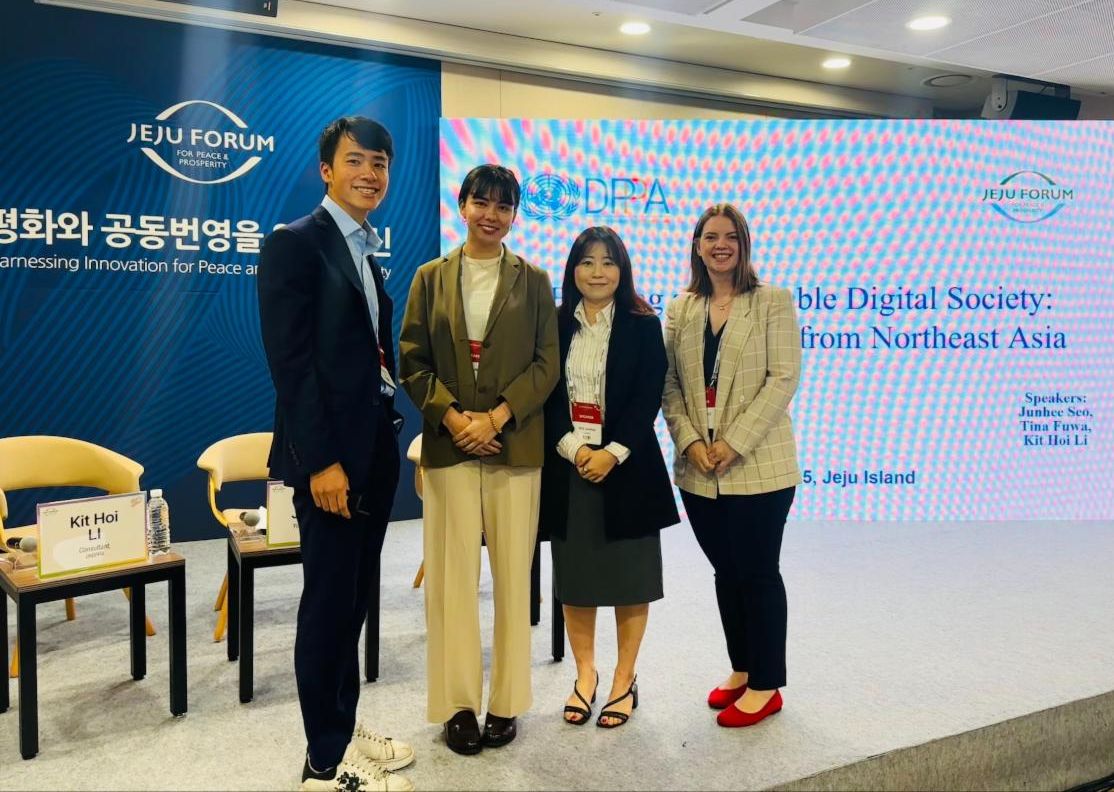
As part of its engagement at the Forum, DPPA also organized a youth-led panel under the Futuring Peace in Northeast Asia initiative. The session brought together young peacebuilders Japan, the ROK and China, which presented forward-looking policy recommendations aimed at shaping a more inclusive digital future for the region. From expanding rural digital infrastructure and launching youth-led AI and innovation hubs, to piloting cross-border data-sharing, the youth recommendations offer a blueprint for regional digital governance grounded in equity and collaboration. The panel called for strengthening cooperation in Northeast Asia, including with youth as co-creators of peace and innovation in the digital age.
Next Week
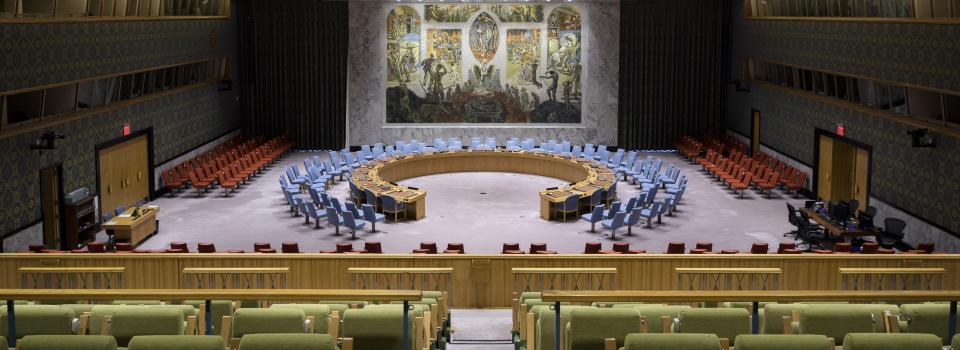
Guyana will assume the Presidency of the Security Council for June.
``` This cleaned HTML: - Removes all redundant `


