

This is why a three-day camp bringing together 10 journalists from the Albanian, Serbian, Turkish and Egyptian communities proved to be such a game changer. One concrete outcome was that participants agreed to team up and work on stories together.
“The most important lesson for me was regaining trust,” said Figen Shaban, a journalist from the Turkish community.
Figen, who works for RTK Radio 2 in Pristina, said that many of the colleagues she spent three days with at the camp in Podujevë/Podujevo were journalists she had previously only known through their reporting.
“Inter-ethnic cooperation not only breaks professional barriers but also builds bridges of trust that are often missing in our everyday reporting.”
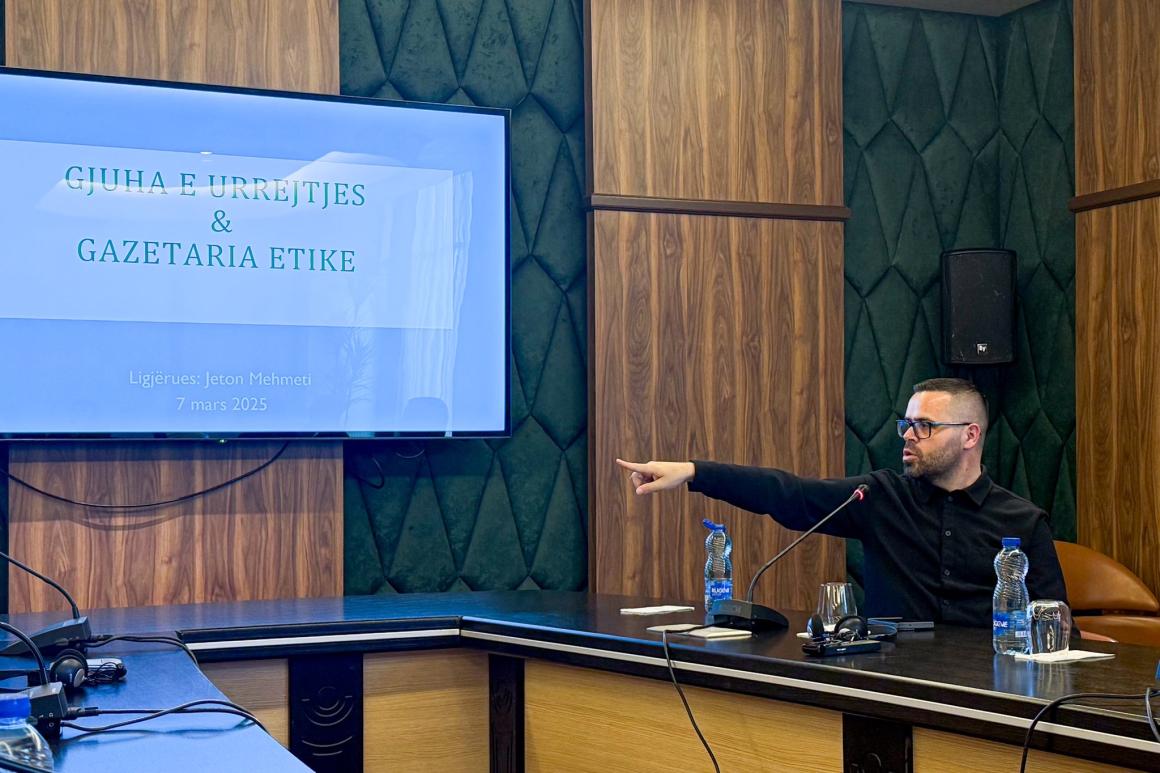
Organized by the Association of Journalists of Kosovo (AJK), with the support of the United Nations Mission in Kosovo (UNMIK), the camp brought together reporters to reflect on the challenges facing journalism today — and to recentre the human relationships that often get lost behind the pace of the news cycle.
For many, the camp was also an opportunity to talk openly about the realities of working in today’s media environment.
Through discussions facilitated by media expert and professor Jeton Mehmeti and AJK Chairperson Xhemajl Rexha, participants explored pressing issues shaping journalism today, including media freedom, misinformation, disinformation and hate speech, as well as the responsibility to protect freedom of expression and ensure access to reliable – and not just timely – information.
Ivan Mitić, a journalist from North Mitrovica working with NGO Aktiv, said the camp was a vital reminder that cooperation is possible when professional values trump political narratives.
“People can cooperate and spend time together regardless of ethnicity, religion, or any other difference — as long as they are open-minded, not loaded with political rhetoric, and are able to see the bigger picture.”
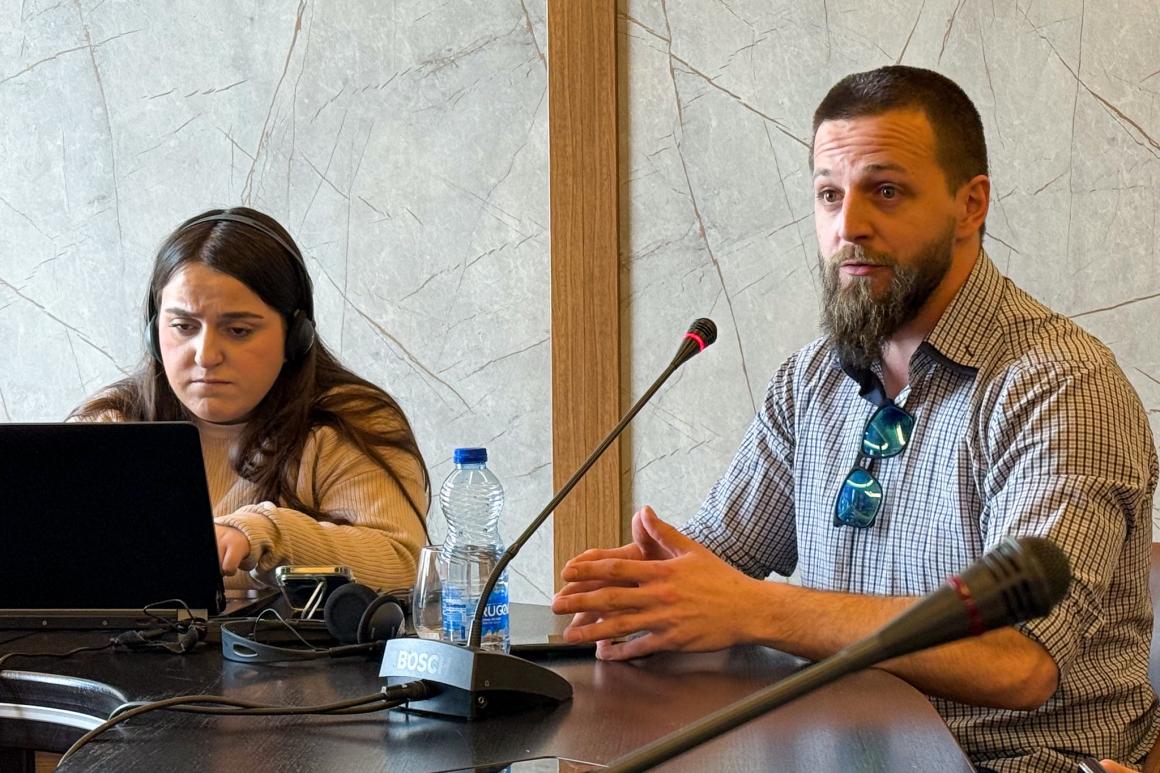
Informal conversations proved just as valuable as the formal sessions. Participants shared experiences and brainstormed ways to jointly counter challenges. For example, they reflected on recent crises in the northern municipalities, recalling how journalists across media outlets and communities supported one another in critical moments.
Edon Gerbani, a journalist with Radio Television of Kosovo (RTK) from Gjakovë/Djakovica, noted that: “These experiences help expand our professional networks and allow us to better understand the challenges faced by colleagues from other communities. Together, we can also identify shared solutions.”
The journalists will now collaborate on joint stories for publication across multiple media outlets and in both Albanian and Serbian.
In a media landscape increasingly threatened by misinformation, shaped by polarization and driven by clickbait pressure, the camp served as a reminder that professional, cooperative journalism remains a powerful tool to bridge divides and share stories that matter to all communities in Kosovo.


