


New York, UN
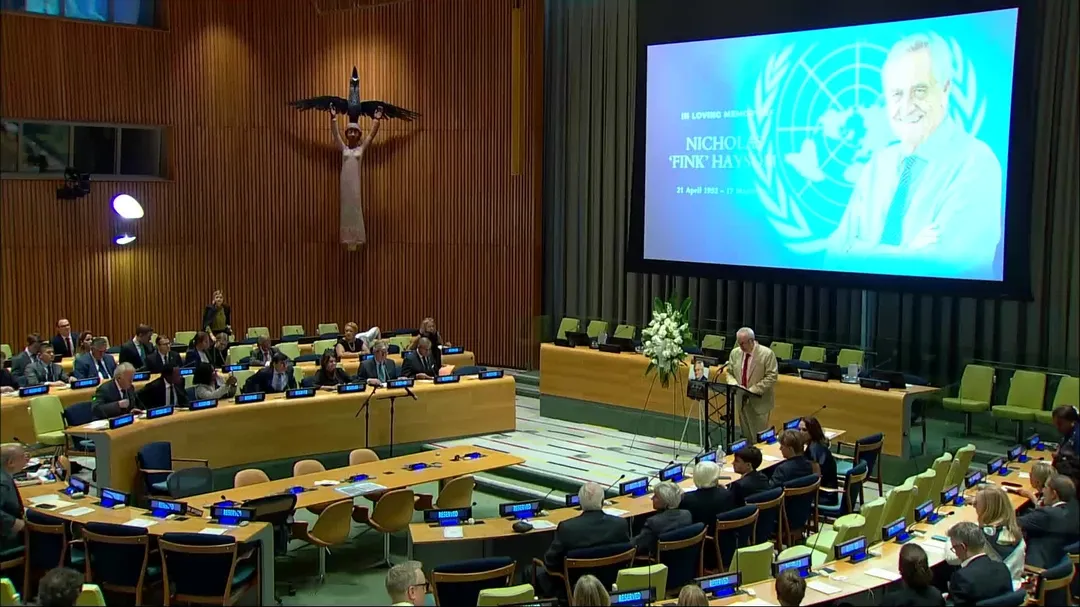
Rosemary A. DiCarlo, Under-Secretary-General for Political and Peacebuilding Affairs
Excellencies,
Distinguished guests,
Dear colleagues,
Today we honor a peacemaker and a mediator of rare intuition and unparallelled capacity to bring people together.
His were not dreams of a better future emerging out of thin air. Fink was a firm believer that reaching common ground was possible even in the most difficult of circumstances, and that sustaining it required long-term vision, patient confidence-building, and never stopping “rolling up your sleeves”. Moving forward one step at a time. With an end goal in mind and pathway to get there.
As Jean-Pierre has noted, Fink came to the UN family having built a distinguished career in South Africa, on the wider African continent, and beyond.
During his youthful activism as part of the struggle for justice in his home country at a time when political change was hard to imagine and the most fundamental human rights were only an aspiration for many, the combination of Fink’s ability as an organizer and strategist and his legal and political acumen were instrumental in giving shape to a political transition and reconciliation that the world admired.
To the United Nations, these same skills would prove invaluable.
Fink strongly believed in the importance of listening patiently and empathetically in order to promote understanding. This gave him a unique capacity to win people’s trust in an instant, help project their aspirations onto something achievable and assist them in realizing them.
He joined the UN in 2005 to lead the Organization’s efforts to support Iraq’s constitutional process. In deeply challenging circumstances, he tried to empower Iraqis to draft a legal and political framework that could serve as a new social contract. In doing so, he invited parties and colleagues alike to immerse themselves in an exercise of imagination about peace and justice, and on these premises lay the foundations of a better future.
This is the approach that Fink brought to the task in all the subsequent UN missions he served, from Afghanistan to Sudan, to Somalia, and to South Sudan.
I first met Fink when he was head of the Political Unit in the Secretary-General’s office and I was at the US Mission to the UN. When there were heated procedural or other disagreements in the Security Council and the General Assembly, we novice DPRs knew whom to call for help – it was Fink. Always Fink.
Later, when I joined the UN Secretariat, Fink was preparing to head our mission in Somalia. We could not have asked for a more skilled and principled individual than Fink to lead such a complicated and dangerous mission.
After Somalia, Fink worked on Sudan. This was in the aftermath of the fall of Omar al-Bashir. Sudan was very close to his heart. He cared deeply about the country and was committed to ensuring that the aspirations of the Sudanese people he had worked with for so many years would finally be met. Fink was instrumental in helping us set up our mission in Khartoum and helped us tremendously along the way as we worked with the Sudanese people to chart a more promising future for the country.
Those of us who had the privilege of working alongside him deeply admired his unwavering dedication to service. His natural leadership inspired and empowered everyone whose path he crossed. He was a mentor to many of his colleagues. He became a hero to all of them.
I cannot conclude without mentioning Delphine, a dear colleague and a friend, who shared his enthusiasm and desire to make a difference.
My sincere condolences to all of you in the family.
Thank you.
UN Web TV: https://webtv.un.org/en/asset/k1c/k1cq1v34f7