


In Abyei, a disputed territory on the border between Sudan and South Sudan, a small community radio station has survived fire, insecurity, displacement and threats against its staff.
Karbino Dut Aguek is the founder of Abyei FM, the first and only radio station in Abyei. For many communities across Abyei, radio is the only regular source of verified local news and public information.
Under the 2005 Comprehensive Peace Agreement, Abyei was granted special administrative status pending a referendum on its final status. Although the referendum was expected to take place alongside South Sudan's independence vote in 2011, it never happened.
As negotiations over Abyei's future continued, local leaders approached the media development organization Internews to explore establishing a radio station that could support civic education and provide information to local communities.
Karbino was among those recruited for the initiative.
Efforts to establish the station faced several challenges. Sudan declined to approve the project, and when conflict erupted in South Sudan in December 2013, funding was redirected elsewhere.
In 2017, a new opportunity emerged. Internews supported a South Sudanese organization registered in Juba in applying for a broadcasting licence. The International Organization for Migration (IOM) and the Food and Agriculture Organization of the United Nations (FAO) helped fund the equipment. On 11 March 2020, Abyei FM went on air for the first time.
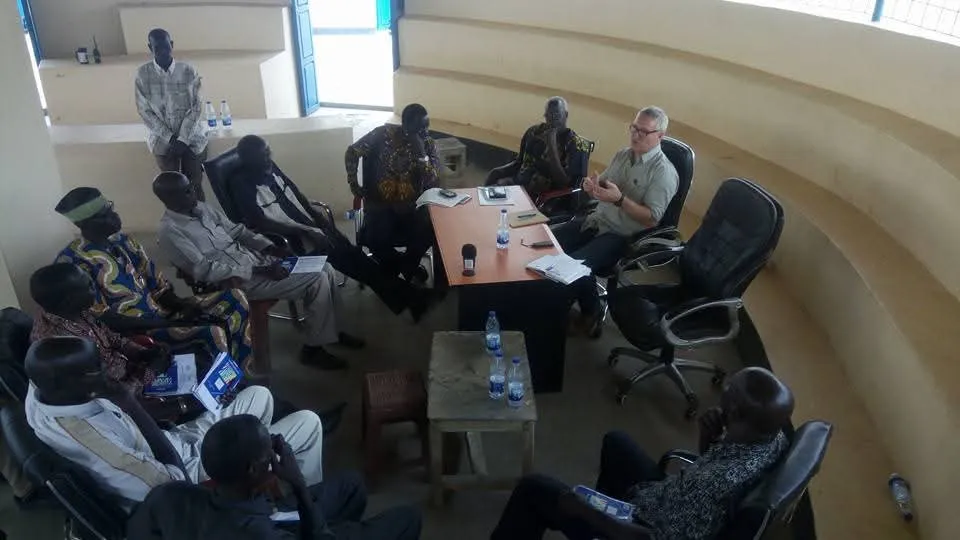
"Everybody was happy," Karbino recalled. But the celebrations did not last.
Nine months later, the station was destroyed by fire, leaving staff without equipment or facilities. The cause was officially attributed to an electrical fault, though Karbino questioned that conclusion.
Fire, insecurity and displacement
After the station was destroyed by fire in late 2020, support from church groups, local partners and donors helped Abyei FM rebuild and resume broadcasting. The station remained on the air until insecurity intensified in 2023.
Threats against staff increased throughout the year. Tensions escalated after some members of the Titbaai vigilante group demanded that the station dismiss its finance director, Ring Madhut, because he came from the Twic community. Karbino refused, calling the request discriminatory.
Following his detention in July 2023, Karbino says pressure against him intensified. Fearing for his safety, he left Abyei and later relocated his family, remaining away for nearly two years.
As efforts to revive the station gathered pace, the United Nations Interim Security Force for Abyei (UNISFA) supported Abyei FM through a Quick Impact Project that improved the station's facilities and access to water. Additional equipment was later provided by the United Nations Development Programme (UNDP), helping prepare the station's return to the air.
Beyond infrastructure support, UNISFA has worked closely with Abyei FM to strengthen its role as a trusted source of information. The Mission has provided training for journalists, including a placement at Eye Radio in Juba in 2024, and partners with the station to produce programmes on its mandate and activities. By supporting access to reliable information, UNISFA helps communities make informed decisions, encourages dialogue and reduces the impact of rumours and misinformation.
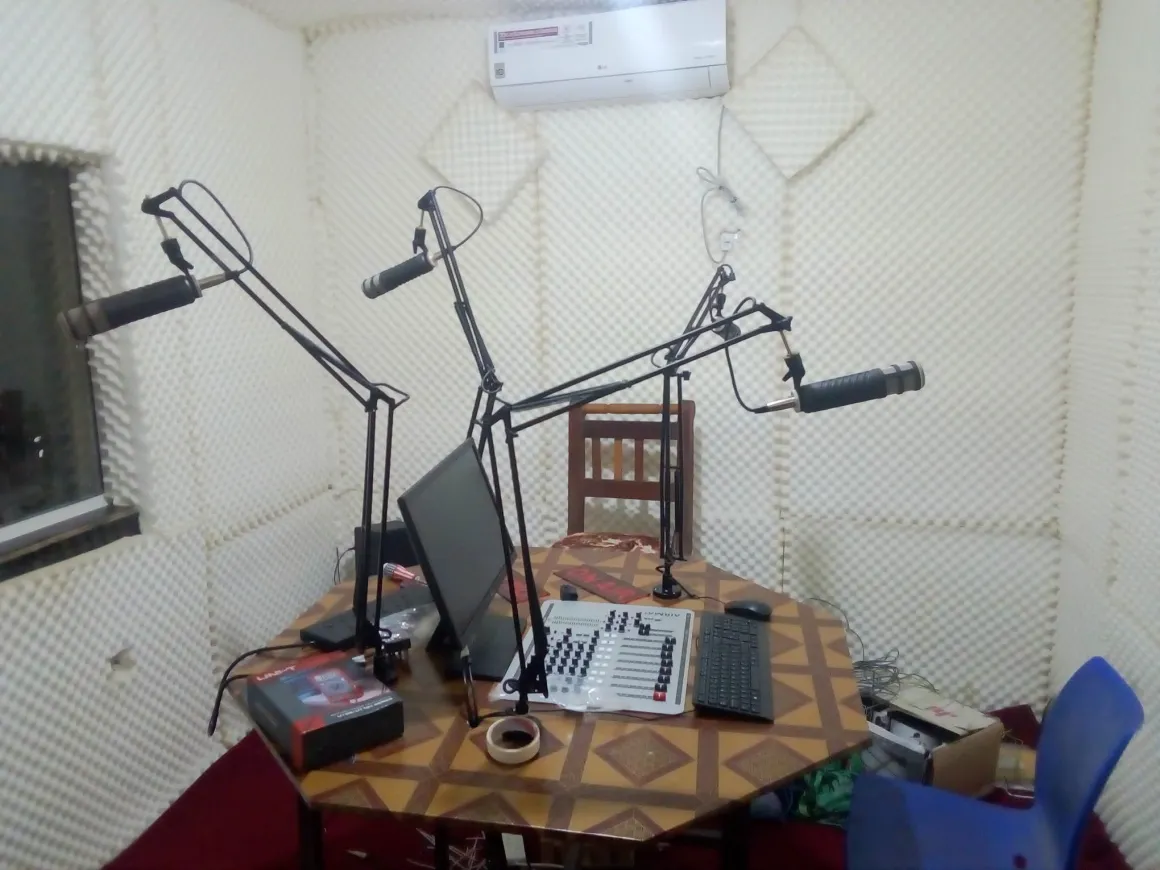
Broadcasting without a station
In 2025, despite insecurity and displacement, Abyei FM continued operating through an improvised narrowcasting system, using loudspeakers at fixed locations to bring daily programmes directly to communities.
A turning point came when Abyei's newly appointed Chief Administrator encouraged Karbino to return, pledging support for the station and efforts to improve security. Following community mediation, Karbino returned to Abyei in June 2025 after nearly two years away.
Although tensions eased, the security situation remained fragile.
"As long as we don't touch hot topics, we remain safe," he said. "But journalism is about digging and asking tough questions."
Back on the air
With Karbino back in Abyei, efforts to restore the station gathered momentum. Thanks to support from local authorities, UNISFA and UNDP, Abyei FM returned to the air on 13 March 2026.
Today, the station broadcasts in Arabic, English and local languages. At full capacity, its signal reaches approximately 100 kilometres across a region where no other broadcaster operates. Programmes include news, public information and discussions that support dialogue among communities.
During the period when Abyei FM was off the air, rumours, misinformation and hate speech spread widely on social media, compounding tensions following the 2022 conflict between the Ngok Dinka and Twic communities. By providing trusted information and giving voice to different communities, the station is helping counter speculation and support dialogue.
In early May 2026, when Ngok Dinka and Twic elders met in Wau for a peace conference and did not sign a final communiqué, social media speculation framed the outcome as a return to hostilities. Abyei FM's correspondent interviewed delegates from both sides, who reaffirmed their commitment to peaceful coexistence, helping provide communities with verified information at a critical moment.
Although Abyei FM is back on the air, its long-term future remains uncertain.
Support from the Chief Administrator has helped keep the station operating since Karbino's return, while UNISFA has increased patrols around the station and remains in regular contact with journalists to help address security concerns. Financial challenges persist, however. To strengthen the station's sustainability, the team is seeking support for solar power and the training of a local technician to maintain equipment.
For Karbino, the station's return represents something larger. More than a decade after the idea was first conceived, Abyei FM continues to provide trusted information and a platform for dialogue in a region where access to independent media is limited.
"My legacy and years of patience and suffering won't evaporate," said Karbino. "Seeing the radio back on air makes me proud."


